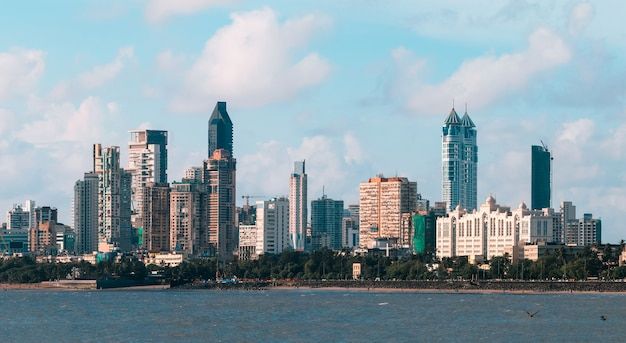
Mumbai’s skyline is defined not just by its skyscrapers, but by the skeletal remains of its industrial past—textile mills that once powered the city’s economy and shaped its working-class identity. Today, as these sites face redevelopment pressure, the question is not whether to redevelop, but how to remember.
More Than Bricks and Beams
Textile mills like Phoenix Mills, Kohinoor, and New Empire are not obsolete structures—they are repositories of collective memory. Their vast sheds, sawtooth roofs, and load-bearing walls embody a distinct architectural language born of function, not fashion. Demolishing them erases not just buildings, but chapters of Mumbai’s story.
Adaptive Reuse: A Middle Path
We advocate for sensitive adaptive reuse—retaining iconic facades, structural frames, and spatial rhythms while introducing new functions: cultural centers, boutique offices, or mixed-use complexes. In our conceptual work for a Central Mumbai mill, we preserved the original weaving hall as a public atrium, with retail and co-working spaces layered above.
Policy as Preservation Tool
The Maharashtra government’s policy allowing 25% additional FSI for heritage conservation is a step forward—but implementation remains inconsistent. We work with heritage committees, historians, and civic groups to ensure that “conservation” isn’t reduced to a token facade treatment.
Community as Custodian
Former mill workers and their families still live in surrounding chawls. Any reuse strategy must include them—not as spectators, but as stakeholders. Public plazas, skill centers, and oral history archives can keep the mill’s legacy alive in everyday life.
Design with Humility
New interventions should speak a contemporary language—but never shout over the old. We use glass, steel, and concrete in ways that contrast yet complement the raw brick and timber of mill architecture, creating a dialogue between eras rather than erasure.
Mumbai’s future doesn’t require discarding its past. By weaving heritage into the urban fabric—not as museum pieces, but as living spaces—we honor the city’s resilience while building its next chapter. As architects, we don’t just design buildings—we steward memory.